
House Washing in Arlington, TX
Hydro Hustle soft washes house exteriors in Arlington, Texas — brick, vinyl siding, stucco, fiber cement, and painted surfaces. We use low pressure and the right detergent for the material rather than blasting it, which is what removes mildew, pollen, and North Texas red clay dust without damaging mortar, paint, or siding. Free estimates, flat quote before we start. Call or text (682) 218-4939.
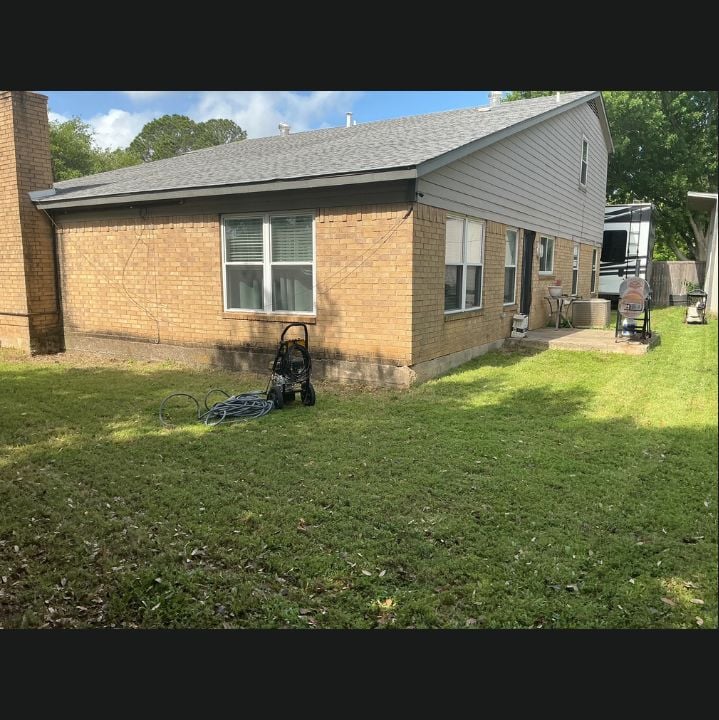
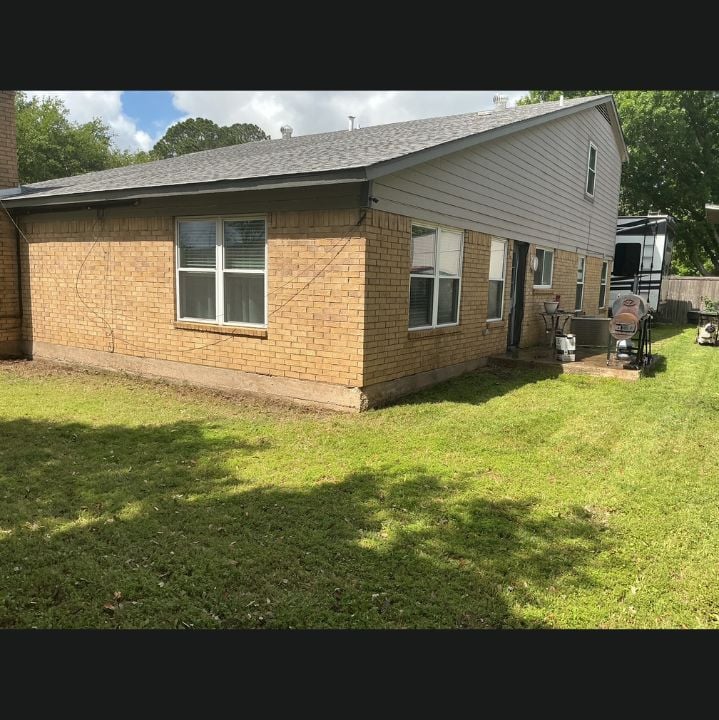
- Soft Wash Method
- Free Estimates
- Flat Quotes
- Landscaping Protected
Why Your House Should Be Soft Washed, Not Pressure Washed
This is the single most important thing to understand before hiring anyone to clean your home’s exterior — and it’s where most of the damage in this industry comes from.
Pressure washing uses high-force water to physically blast material off a surface. It’s the right tool for concrete, which is dense and can take it.
Soft washing uses low pressure — roughly the force of a strong garden hose — combined with a cleaning solution that does the actual work. The detergent breaks down the mildew, algae, and grime chemically, then a gentle rinse carries it away.
On a house, soft washing isn’t just safer. It works better. High pressure knocks the surface layer of growth off and leaves the roots behind, so it comes back in a few months. A proper soft wash kills the organism, so the result lasts significantly longer.
Meanwhile the damage from doing it wrong is expensive and permanent: eroded mortar joints on brick, stripped paint, water driven up behind vinyl siding panels where it sits and grows mold, and pitted stucco.
| Surface | Correct Method | What High Pressure Does To It |
|---|---|---|
| Brick & mortar | Soft wash | Erodes mortar joints and can drive water into the wall |
| Painted brick | Soft wash | Strips and peels the paint |
| Vinyl siding | Soft wash | Forces water behind panels, where it stays and grows mold |
| Stucco & EIFS | Soft wash | Pits, cracks, and chips the finish |
| Fiber cement (Hardie) | Soft wash | Damages the factory finish and voids some warranties |
| Wood siding & trim | Soft wash | Furs the grain and leaves permanent wand marks |
| Asphalt shingle roof | Soft wash only | Strips protective granules; can void the shingle warranty |
| Concrete driveway or patio | Pressure wash | Nothing — concrete is dense enough to handle it |
Exteriors We Clean in Arlington
Arlington housing stock runs from 1960s and 70s brick ranches to newer builds in developments like Viridian. Each needs a different approach.
Brick
The dominant exterior in Arlington. Brick handles cleaning well, but the mortar between it does not — high pressure eats mortar joints, and the repair costs more than any wash. We soft wash it.
Painted Brick
Common on older homes in central and north Arlington. Paint on masonry is far more fragile than it looks, especially if it’s been through a few Texas summers. Low pressure only, every time.
Vinyl & Fiber Cement Siding
Siding is deceptively easy to damage. Water driven upward at the wrong angle gets behind the panels and sits there. We work with the lap direction, not against it.
Stucco & EIFS
The least forgiving surface on a house. Stucco chips and pits under pressure and the repair is visible forever. Gentle detergent and a controlled rinse.
Soffit, Fascia & Eaves
Where the mildew, cobwebs, wasp nests, and mud dauber tubes actually live. Cleaning the walls but skipping the overhang is why some house washes look half-finished.
Concrete Around the House
Walkways, porches, and the slab edge get pressure washed while we’re there — they’re dense enough to take it, and they’re usually the dirtiest thing in the frame.
What’s Actually On Your House
Exterior grime in Tarrant County isn’t generic dirt. It’s a specific set of local problems, and knowing which one you’re looking at determines how it gets treated.
- Mildew and algae — the green and black film, worst on north-facing walls and anywhere shaded by an oak
- Oak pollen — the yellow-green coating every spring that turns to a gray film once it rains
- Red clay dust — North Texas soil blown onto light brick and siding, and splashed up along the base
- Mud dauber and wasp nests — under eaves, in soffit corners, and behind downspouts
- Cobwebs and insect debris — around light fixtures, window frames, and porch ceilings
- Sprinkler mineral staining — the chalky white or rust-orange marks where overspray hits brick
An honest note on hard water stains. Mineral deposits from sprinkler overspray are a different problem than organic growth — they’re calcium and iron bonded to the masonry, not something living on top of it. A standard house wash improves them but often won’t remove them completely. Heavy staining needs a separate specialty treatment, and results vary by how long it’s been building. We’ll tell you honestly what we think we can get before you commit to anything.
What a Hydro Hustle House Wash Looks Like
Walk & Quote
We walk the house with you, identify what we’re dealing with on each elevation, and give you a flat price. Free, and there’s no obligation.
Protect
Plants and beds get pre-wet, outlets and fixtures get checked, and anything that shouldn’t get soaked gets covered before a drop of solution goes up.
Apply & Dwell
Cleaning solution goes on at low pressure and is given time to work. This is the step that actually kills the growth — rushing it is why some washes don’t last.
Rinse & Walk It
Everything gets rinsed from the top down, landscaping gets rinsed again, and we walk the house with you before we pack up.
What House Washing Costs in Arlington
House washing is quoted per job rather than at a flat rate, and any company giving you a firm price sight-unseen is guessing. What it depends on:
- Square footage and number of stories
- Exterior material — brick, siding, stucco, or a mix
- How heavy the mildew and staining actually are
- Access — fences, slopes, tight side yards, and landscaping
- Whether soffit, gutters, or concrete are included
Text a few photos of your house to (682) 218-4939 and you’ll usually have a flat price back the same day. The estimate is free, and the number we give you is the number you pay.
Bundling lowers the total. A house wash plus driveway plus bin cleaning on one visit costs less than three separate trips.
How Often Should You Wash a House in North Texas?
Most Arlington-area homes do well on a wash every 12 to 18 months. Our climate is unusually hard on exteriors — humid summers drive mildew growth, spring brings heavy oak pollen, and the red clay soil means airborne dust year-round.
Some situations need it more often:
- Heavy tree cover — homes shaded by mature oaks hold moisture and grow mildew faster, especially in older neighborhoods near River Legacy Park
- North-facing walls — they get the least sun and almost always show growth first
- Sprinklers hitting the house — constant moisture plus mineral deposits
- Selling the house — a wash before listing photos is one of the cheapest returns in real estate
Because a proper soft wash kills the growth rather than knocking it off, results hold considerably longer than a high-pressure blast.
Where We Wash Houses
Hydro Hustle is based in Arlington and covers the surrounding Tarrant County communities. If you’re near the edge of this list, call and ask.
- Arlington, TX
- Mansfield
- Kennedale
- Burleson
- Pantego
- Dalworthington Gardens
- Grand Prairie
- Hurst
- Euless
- Bedford
House Washing FAQs — Arlington, TX
How much does it cost to wash a house in Arlington, TX?
House washing is quoted per job, because price depends on square footage, number of stories, exterior material, how heavy the staining is, and access around the property. Text a few photos to (682) 218-4939 and you’ll usually have a flat price back the same day. Estimates are free and there’s no obligation.
What is the difference between soft washing and pressure washing?
Pressure washing uses high-force water to physically blast material off a surface. Soft washing uses low pressure — about the force of a strong garden hose — plus a cleaning solution that breaks down mildew and algae chemically. Houses need soft washing. Concrete can take pressure washing. Using high pressure on brick, siding, stucco, or a roof causes damage that’s expensive to repair.
Will pressure washing damage my brick or mortar?
High pressure will, which is exactly why we don’t use it on masonry. Mortar joints are much softer than the brick around them and erode under a concentrated stream, and once the joint is gone you’re looking at repointing. Soft washing cleans the brick without touching the mortar.
Is house washing safe for painted brick and painted siding?
Yes, when it’s soft washed. Paint on masonry is more fragile than it appears, especially after several North Texas summers, and high pressure will lift and peel it. We use low pressure and a detergent appropriate for painted surfaces. Older painted exteriors that are already chalking get an even gentler approach.
Will it kill my plants or landscaping?
We pre-wet plants and beds before any solution goes on, which prevents absorption, and rinse everything thoroughly afterward. That’s standard practice for soft washing and it’s a step we don’t skip. If you have anything unusually delicate, point it out during the walkthrough and we’ll cover it.
Can you remove hard water stains from brick?
Partially, and we’d rather be upfront about it. Sprinkler overspray leaves calcium and iron deposits bonded to the masonry, which is a different problem from organic growth sitting on the surface. A standard house wash improves the appearance but usually won’t eliminate heavy mineral staining. Severe cases need a separate specialty treatment and results vary. We’ll give you an honest read before you commit.
How long does a house wash take?
Most single-story Arlington homes take two to four hours. Two-story homes and heavily stained exteriors take longer. We’ll give you a realistic window when we quote it.
Do you use my water?
Yes. We connect to an outdoor spigot, which is standard for the industry. Just make sure it’s accessible and turned on before we arrive.
Do I need to be home?
Not for the whole job, but it helps to be there for the initial walkthrough so we can point out problem areas together, and at the end so you can look it over before we leave. If your schedule doesn’t allow it, we’ll send photos.
How often should I have my house washed in North Texas?
Every 12 to 18 months suits most Arlington-area homes. Heavy tree cover, north-facing walls, and sprinklers hitting the exterior all shorten that interval. Because soft washing kills the growth instead of knocking it off, the results last noticeably longer than a high-pressure wash.
Do you work in the winter?
Yes. DFW is close to a year-round market and winter is often the easiest time to get on the schedule. Hard freezes are the exception — water on walkways becomes a hazard below freezing, so we reschedule.
Add These to the Same Visit
Driveway & Concrete Cleaning
The driveway is usually the first thing anyone sees. Red clay staining, oil drips, and fertilizer rust all come off.
Driveway cleaning →Roof Soft Washing
Those black streaks on your shingles are algae. Same low-pressure method, no granule loss, no voided warranty.
Roof soft washing →Trash Bin Cleaning — $25
The cheapest thing you can add while we’re already at the house. $25 per bin, $45 for both.
Bin cleaning →Get Your House Washing Quote
Text a few photos, get a flat price, and get it cleaned properly. Serving Arlington and all of Tarrant County.
(682) 218-4939